

Artists United for Our Freedoms
Artists and creatives speak up for the freedom to create, speak and dissent.
On March 27, the day before millions of Americans took to the streets for No Kings, the Committee for the First Amendment brought artists, writers, musicians and journalists together outside the Kennedy Center in Washington, D.C. and inspired more people to take action the next day to show up at No Kings.
The location was deliberate. The president’s efforts to overhaul the Kennedy Center had turned it into one of the clearest symbols of political interference in American cultural life, but what was happening there was part of something much bigger. Pressure on journalists and media companies. Attacks on artists and performers. Government interference in cultural institutions. Growing consolidation of the media Americans depend on for news and entertainment.
Artists United for Our Freedoms brought those fights together, and united the entertainment industry to defend the freedom to create, report, write and speak.
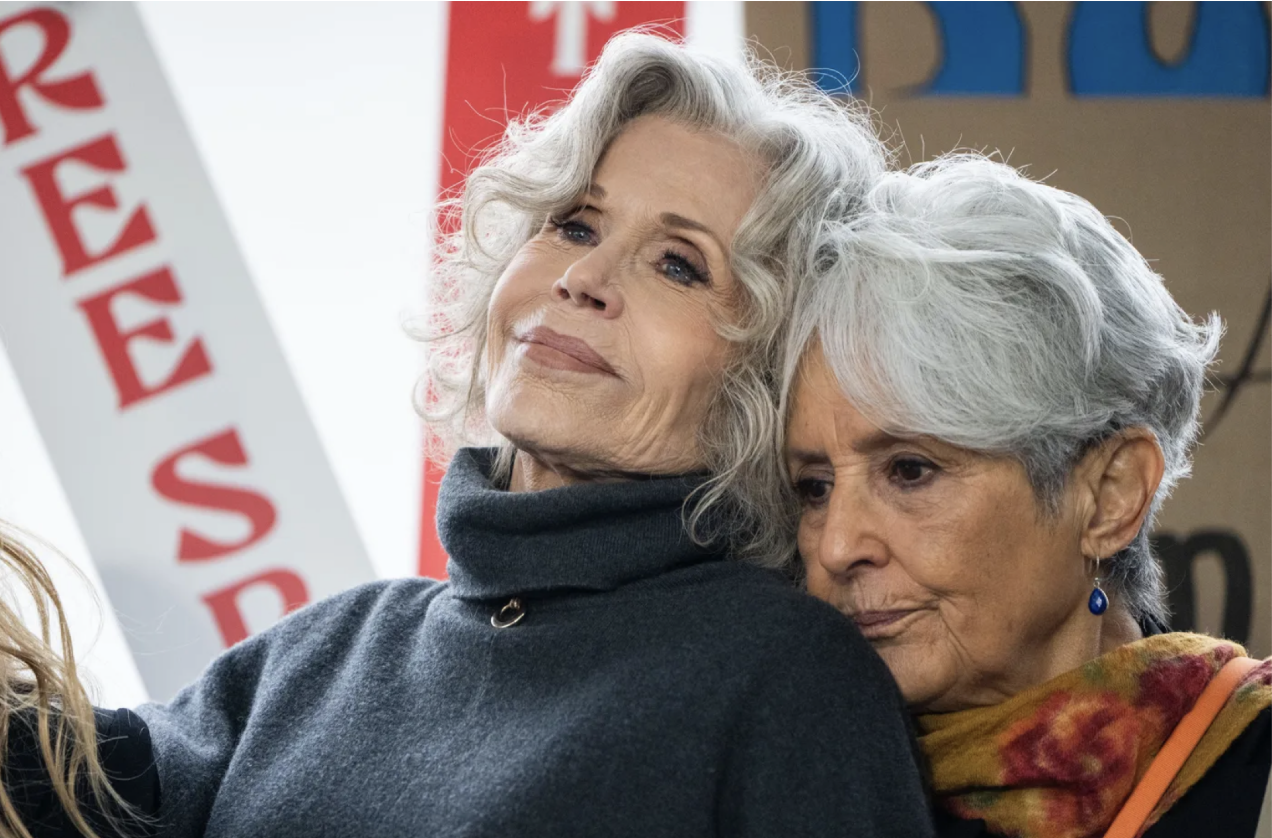
Jane Fonda was joined by Joan Baez, Maggie Rogers, Billy Porter, Sam Waterston, Rupi Kaur, Ann Patchett, Joy Reid, Jim Acosta, Griffin Dunne, Crys Matthews and others for speeches, performances and a public call to action.
Breaking the silence
At the rally, Sam Waterston, Billy Porter and Griffin Dunne read from Paul Robeson’s defiant 1956 testimony before the House Un-American Activities Committee. Joan Baez and Maggie Rogers performed together. Artists and journalists spoke about censorship, media capture and what happens when cultural institutions give in to political intimidation.
The message traveled far beyond the Kennedy Center. The event generated national and local coverage and more than 20 million social impressions in 48 hours. Within 30 minutes, the President of the United States responded publicly to Jane Fonda’s remarks. The following day, millions of Americans participated in No Kings demonstrations across the country, some doing so because they were inspired by this action the day before.
For us, that was the point: artists can use their platforms not simply to speak for themselves, but to make it easier for others to speak too. We believe that courage is contagious.